Set it up, start to finish
A private AI agent on your own laptop, running a local model, that can search the web and cite its sources. No account, no API key, no credit card. Every command below was run before it was written down, and every screenshot comes from that run.
| What you need | |
|---|---|
| Machine | macOS, Linux or Windows |
| Disk | ~25 GB for the model |
| Memory | **32 GB or more recommended.** See *If you have less RAM* below. |
| Accounts | none |
Install IronClaw
One binary. No runtime, no database.
curl --proto '=https' --tlsv1.2 -LsSf \
  https://github.com/nearai/ironclaw/releases/latest/download/ironclaw-installer.sh | sh

ironclaw --version      # ironclaw 1.4.0
Windows uses the PowerShell installer and has no background service, so you run ironclaw serve in a terminal and leave it open.
Install Ollama and pull a model
Get Ollama from ollama.com/download, then:
ollama pull qwen3.6:35b-a3bThat is about 23 GB. It is a mixture-of-experts model — 36B total parameters but only ~3B active per token, so it runs far faster than its size suggests.
Keep it loaded so your first reply is not a cold start:
ollama run qwen3.6:35b-a3b "hi" --keepalive 8h
ollama ps      # expect: 100% GPU
100% GPU means every layer is on the GPU. If it shows a CPU split, the model does not fit and everything will be slow.
Onboard
ironclaw onboardA guided wizard. Pick a provider and it provisions local config, an encrypted credential store, and a browser login token. On macOS the master key goes into the **OS keychain**, not a file on disk.
~/.ironclaw and start over. This cost us an afternoon.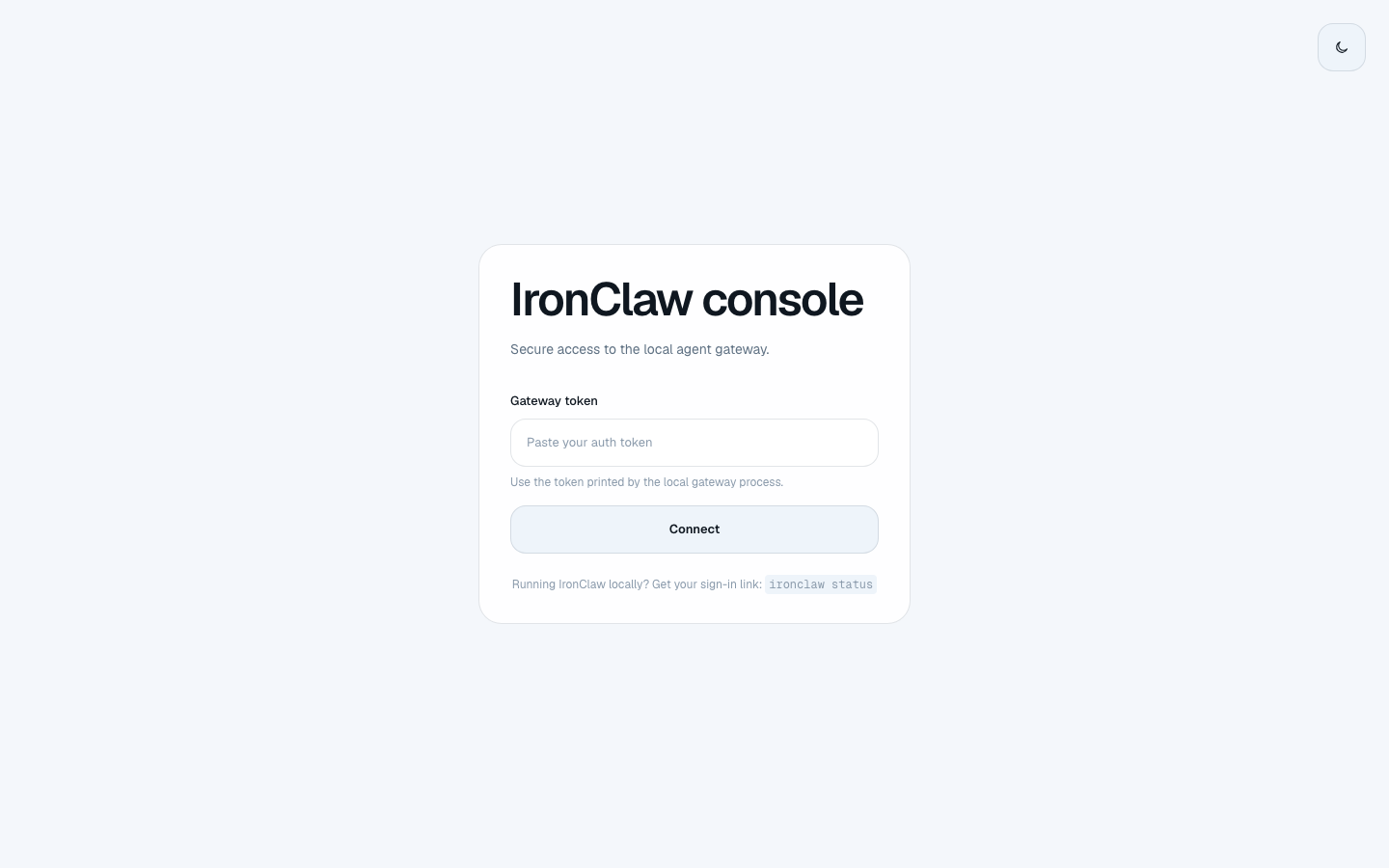
The gateway login screen. The token is printed by ironclaw status.
Point IronClaw at Ollama
ironclaw models set-provider ollama --model qwen3.6:35b-a3b
ironclaw service restart      # config writes do NOT restart the service
ironclaw models status        # expect default.provider: ollama
Ollama is the only provider in the catalogue that needs no credential at all.
Open the console
ironclaw status # prints your login linkOpen the printed link. If it scrolls away, the token is in a file:
cat ~/.ironclaw/reborn/webui-token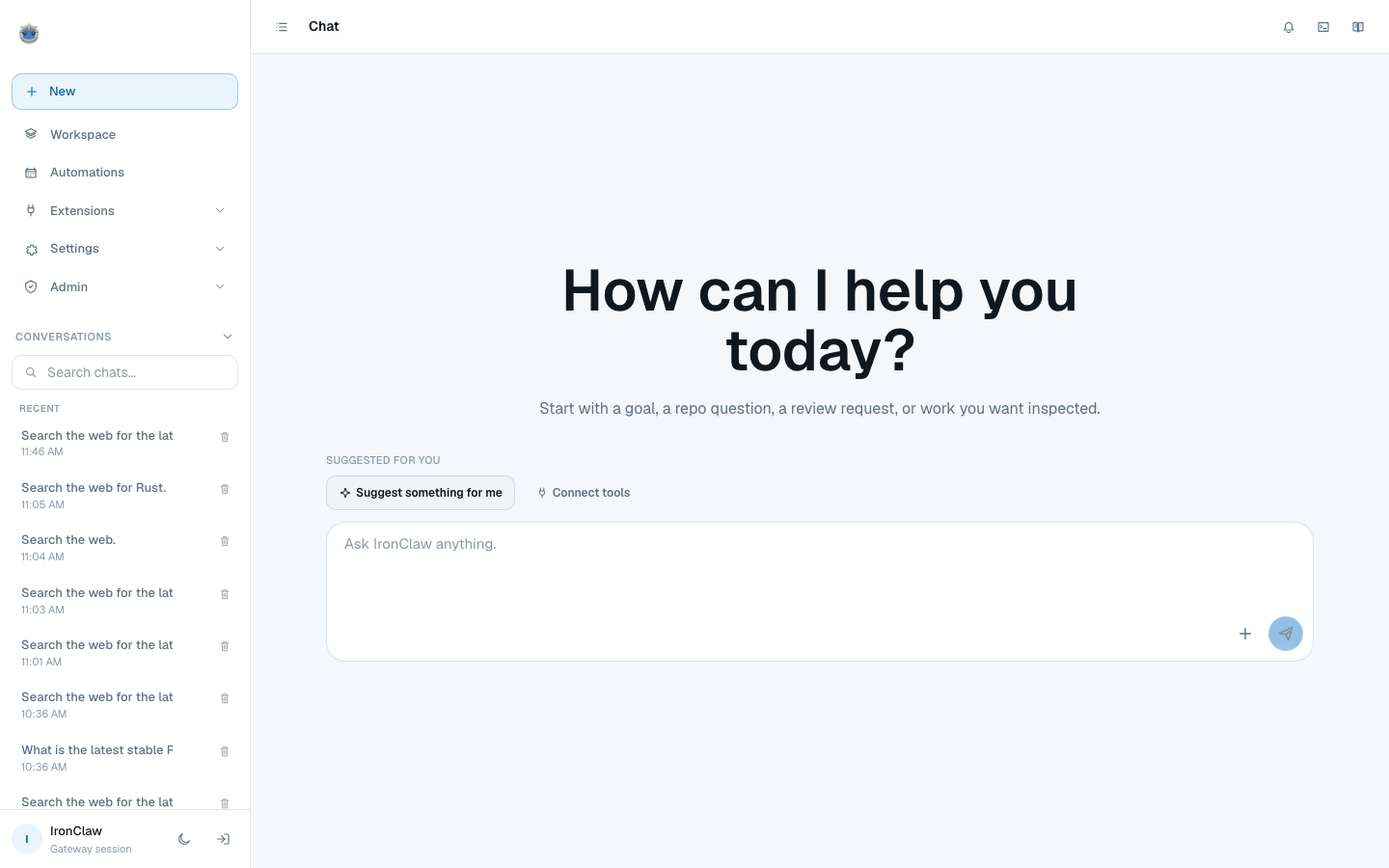
The console. Left rail: New, Workspace, Automations, Extensions, Settings, Admin.
Check the model is wired up
**Settings → Inference** shows the active provider and model.
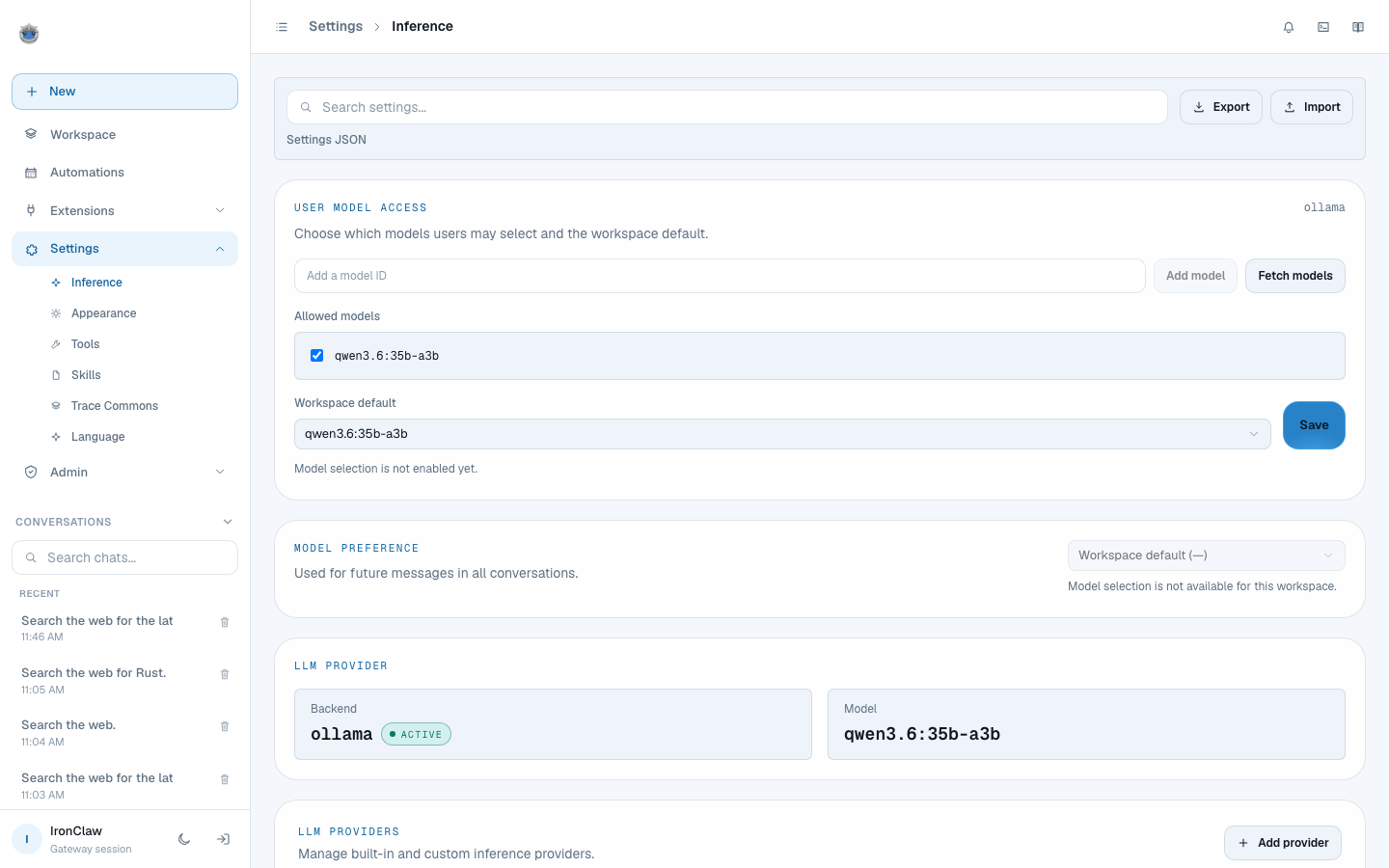
Settings confirms the provider is Ollama and the model is the one you pulled.
Give it a tool
Web access needs no credentials at all.
ironclaw extension install web-accessExpect phase: active and two capabilities, web-access.search and web-access.get_content.
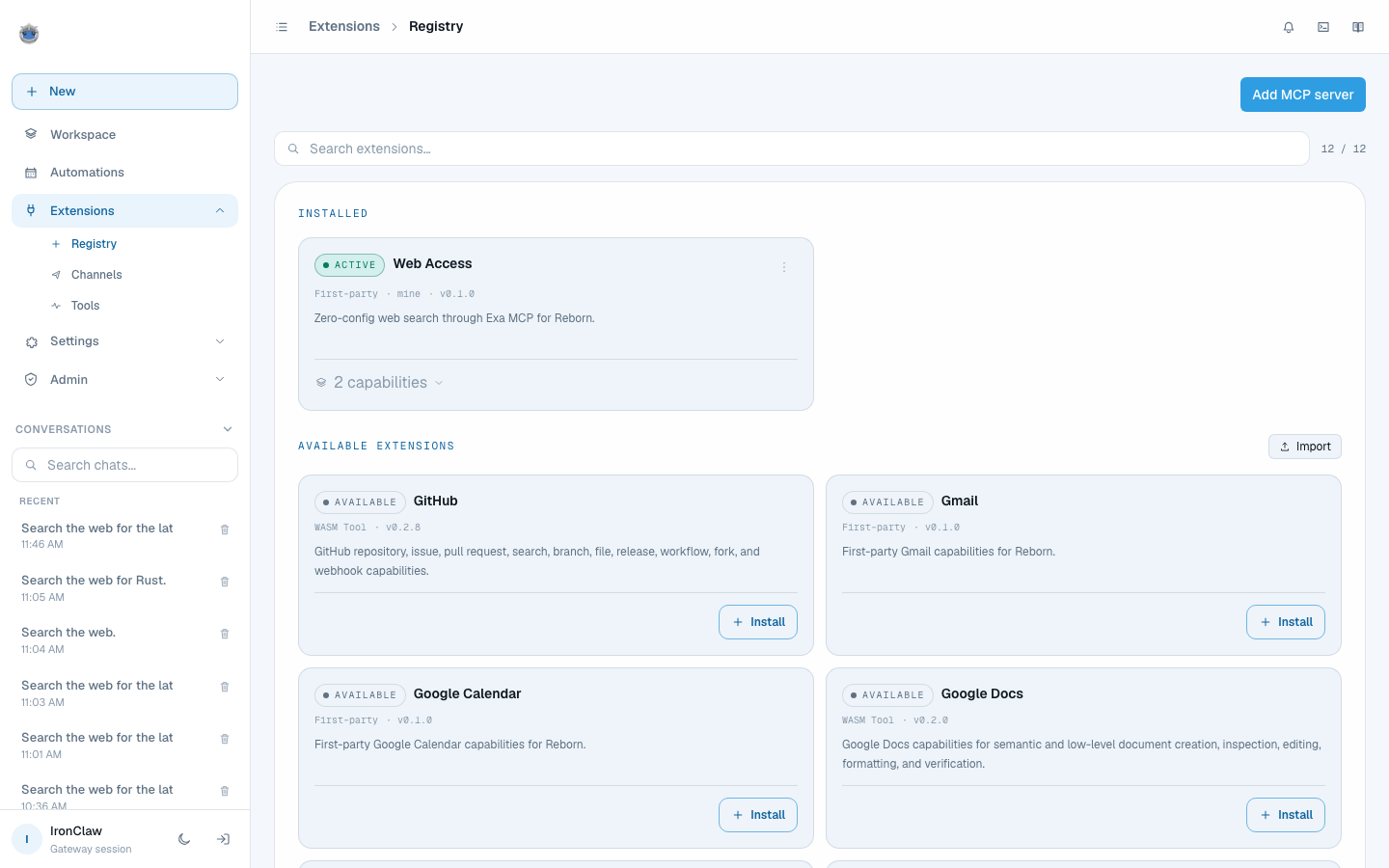
The extension is installed and active.
ironclaw extension activate afterwards. **That command does not exist.** install already activates. The real subcommands are search, install, remove.Watch it actually work
Click **New** and ask it something it cannot know from training data:
Search the web for the latest stable Rust compiler version,
then tell me the version number and cite the source URL.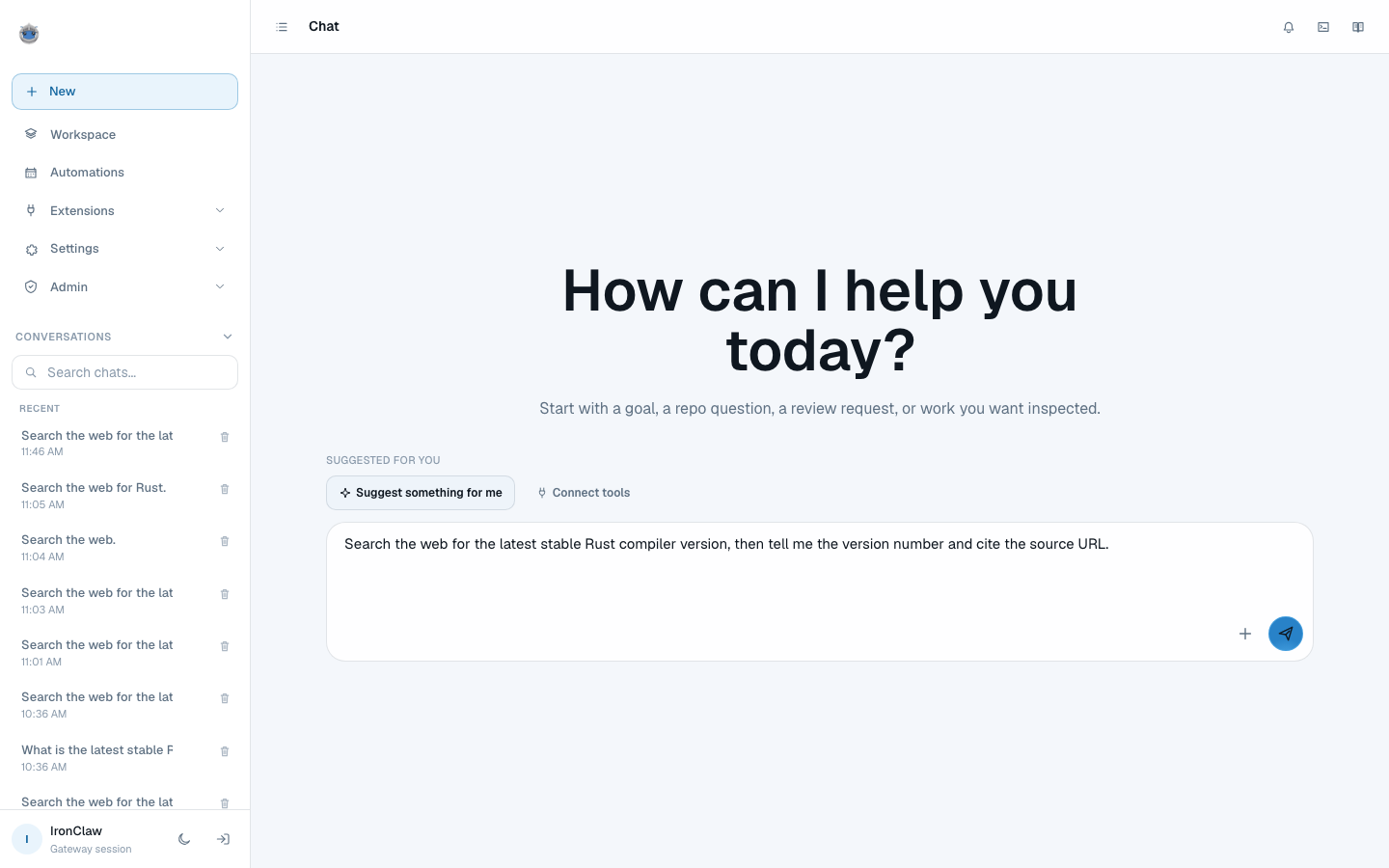
The question, typed into a new conversation.
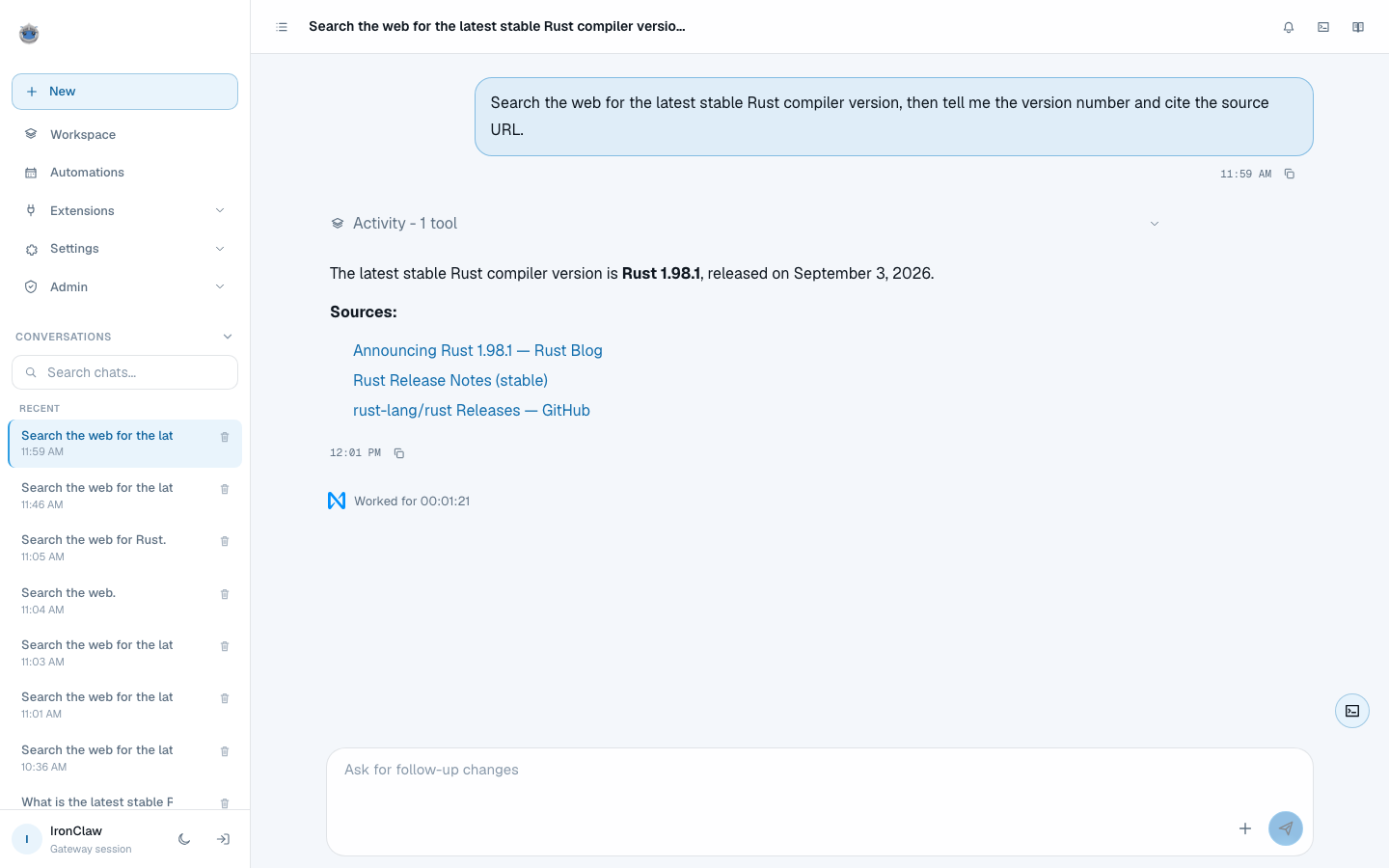
The answer, with three cited sources and the tool-call activity indicator.
Three things to notice in that screenshot:
- **Activity · 1 tool** — the agent called a tool, it did not guess
- **Three cited source URLs** you can click and check yourself
- **Worked for 00:01:21** — about 84 seconds on this hardware
The answer was **Rust 1.98.1, released 3 September 2026** — the day before the run. That version did not exist when the model was trained, which is the proof the tool genuinely executed rather than the model recalling something plausible.
Make it work while you sleep
**Automations** runs things on a schedule, on a heartbeat, or on an event. Describe one in plain language and the agent creates it:
Create a routine that runs every weekday at 9am, searches for news
on my topic, and writes a summary to memory at daily/brief.md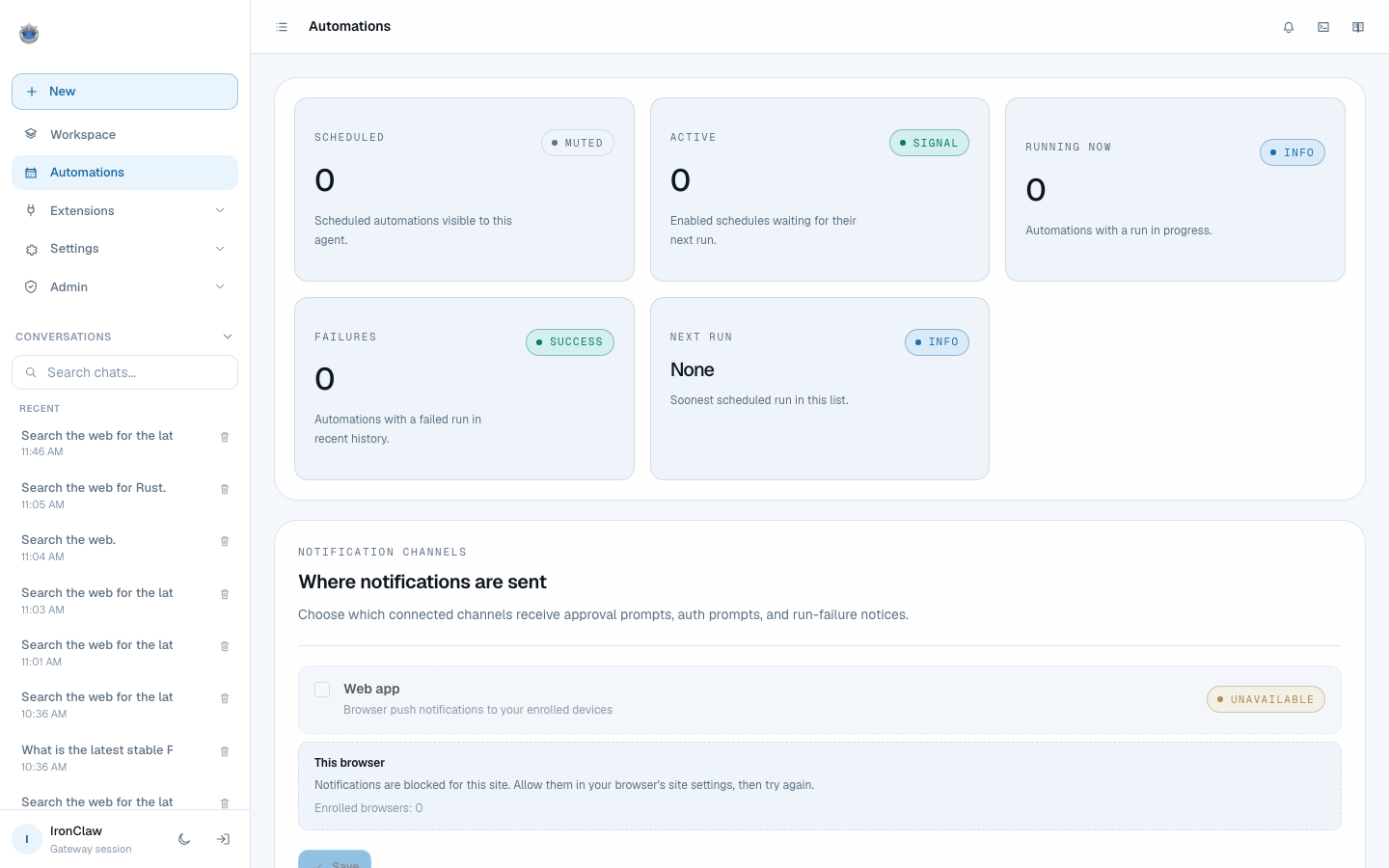
Automations, created by asking in plain language.
If you have less RAM
A model that calls tools reliably wants roughly 24 GB free. The temptation is to shrink the context window so a big model fits. **Do not.** The payload IronClaw sends every turn is about 15,500 tokens — a ~23,500-character system prompt plus ~38,400 characters of tool schemas.
| Context window | Result |
|---|---|
| 8,192 | tool calls fail, silently |
| 32,768 | works, with headroom |
| 262,144 (stock) | works |
If you have 16 GB or less, use a hosted model for inference and keep everything else local. The agent, memory and tool sandbox still run on your machine.
Troubleshooting
| Symptom | Cause and fix |
|---|---|
workspace root must not overlap default skill root /skills | You ran ironclaw from your home directory. cd into a project folder. |
| Login link 404s | Something else owns that port. lsof -nP -iTCP:3000 -sTCP:LISTEN |
| Config change did nothing | ironclaw service restart. Config writes do not restart the service. |
| Replies take minutes | Model not resident, or two models loaded. Check ollama ps, keep one. |
| Tool calls answered in prose | Context window too small. See above. |
credential read failed: BackendUnavailable | Stale keychain entry after a version change. Remove ~/.ironclaw, delete the ironclaw keychain item, onboard fresh. |
Reproducing these screenshots
They are generated, not hand-taken. The last test asserts a real answer appears, so if tool calling breaks the capture fails rather than quietly producing a screenshot of an error.
cd ironclaw-tests
npx playwright test tests/capture-guide.spec.js